How AI Changed Email Deliverability in 2026
Email deliverability has changed more in the past year than most senders realize. Gmail and Microsoft now reject unauthenticated emails outright; AI-powered inbox filtering determines how visible your messages are even after they land; and open rate tracking no longer reflects reality. This article covers what's different in 2026, why it matters for your sending, and what you can do about it.
Authentication is now the baseline
Gmail and Yahoo started requiring SPF, DKIM, and DMARC for bulk senders in early 2024. If you send marketing emails in large volumes, your platform probably already helps you set them up. If not, your messages are being rejected. This is the minimum requirement now, not a differentiator.
What's changed since then is how strictly these protocols are enforced, by whom, and what new layers sit on top of them.
Microsoft catches up, with its own rules
In May 2025, Microsoft started requiring SPF, DKIM, and DMARC for anyone sending more than 5,000 emails per day to Outlook.com, Hotmail.com, and Live.com addresses. Emails that fail authentication are sent to spam or rejected.
Many teams set up authentication for Gmail and Yahoo in 2024, but never verified it with Microsoft. It usually carries over, but there are nuances. Microsoft no longer accepts DMARC policies set to p=none (monitor-only). If your record is still at that level, Outlook might not reliably deliver your emails.
What catches people off guard is that transactional emails are also affected. Messages from accounting systems, CRM tools, and booking platforms are no longer immune to filtering. If your company sends invoices or appointment reminders from your domain and those systems aren't included in your SPF record, those messages can get lost without anyone noticing.
Gmail's AI redefines what "delivered" means
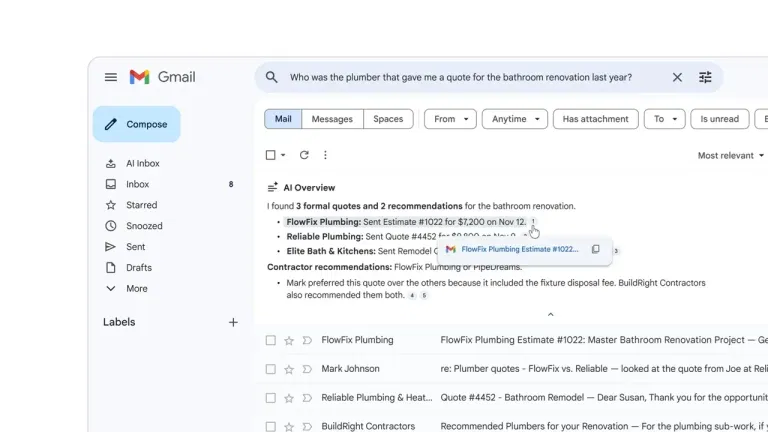
Even if you've got authentication sorted across every provider, a new challenge appeared in January 2026 when Google launched Gemini-powered features within Gmail. The inbox now automatically summarizes email threads, prioritizes messages based on engagement patterns, and pushes low-value emails lower, even if they land in the inbox. Google also introduced an "AI Inbox" view that groups messages into priority clusters instead of showing them in chronological order.
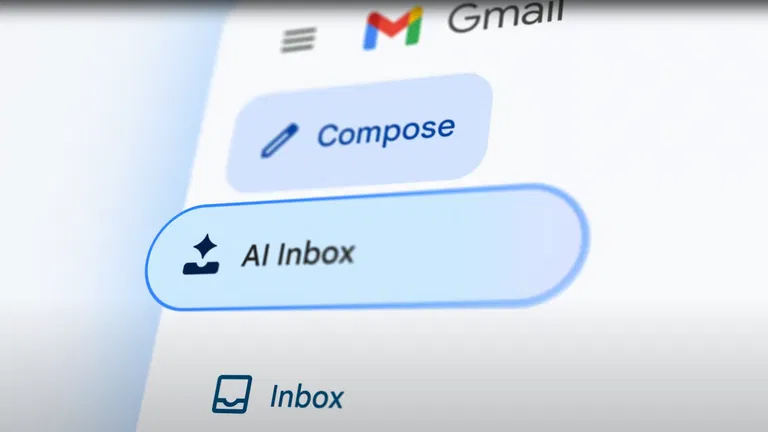
Think about what that means in practice. Your email can pass every authentication check, reach the inbox, and still go unread. Gmail's AI decides how prominently to display it based on your content and your recipients' past behavior. Deliverability is no longer just inbox versus spam. There is now a range of visibility within the inbox itself.
Two things matter most here.
First, your opening sentences. Gmail creates its summary from the first 100–200 characters of your email body. If you start with "We hope this email finds you well" or a generic greeting, the summary will be vague or even misleading. Put your actual message first.
Second, recipient engagement. The AI monitors how your recipients interact with your emails over time. If most of your list ignores you, the AI will deprioritize future sends. List hygiene and segmentation now affect not just complaint rates but also where your email shows up inside the inbox.
Open rates have lost their meaning
These changes don't just affect how emails are displayed. They also break the way most marketers measure success.
Apple's Mail Privacy Protection, introduced in 2021, preloads tracking pixels via Apple's servers. Every email gets marked as "opened" whether it's actually read or not. Since Apple Mail accounts for roughly 49–58% of all email opens, the distortion is hard to ignore. Some ESPs exclude these false opens by default, while others do not.
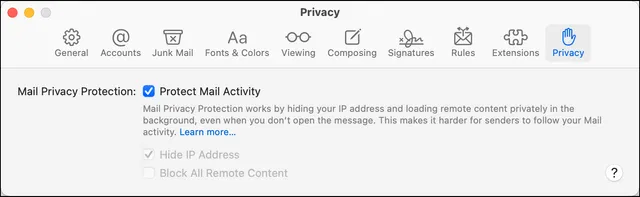
Gmail's AI features add to the problem. Gemini might automatically open emails to generate summaries, which inflates open rates on Google's side, too.
Between these two platforms, open rates have become noise. Focus on clicks, replies, and conversions instead. If your automations trigger on "email opened," rebuild them to use clicks or other direct actions.
If you create emails in Topol, position your main CTA at the top and make it clearly clickable. Click behavior is still the most reliable engagement signal your sending platform can track.
AI-generated spam is making filters stricter for everyone
AI isn't just improving inbox filters. It's also generating the spam that those filters are designed to catch. Over half of all spam emails are now AI-generated. These messages avoid obvious tells like poor grammar or generic greetings, and some can imitate the tone of familiar senders or blend into existing threads.
Inbox providers have responded by shifting their filters from content analysis to behavioral pattern detection. Gmail's RETVec system reads text as visual patterns rather than individual characters, making it resistant to character-substitution tricks. According to Google, RETVec improved Gmail's spam detection by 38% while reducing false positives by 19.4%. Filters now look at factors like sentence complexity, punctuation habits, and writing rhythm to distinguish human-written emails from AI-generated ones.

For legitimate senders, this creates an unexpected side effect. Emails that are too uniform in structure or too polished in a templated way can get flagged, not because they're spam, but because they resemble the patterns AI spam produces. Vary your formatting, write naturally, and avoid sending identical-looking emails every time.
What to do about it
None of this requires a major overhaul. Most of the work is a one-time audit and a few habit changes.
Start by verifying your Microsoft authentication. Use DMARCeye to confirm SPF, DKIM, and DMARC pass for all major providers. Make sure every system sending email from your domain, including accounting, CRM, and transactional tools, is covered in your SPF record.
If your DMARC policy is still set to p=none, plan the move to p=quarantine or p=reject. This is now required for reliable Outlook delivery.
Then look at the first two sentences of your recent campaigns. If they don't clearly state what the email is about, rewrite them. Gmail's AI builds its summary from that content, and a vague opening means a vague summary.
Stop relying on open rates as a performance indicator. Switch from open-based automation triggers to click-based ones, and check whether your ESP includes or ignores Apple MPP opens in its reporting.
Finally, clean your list for engagement, not just bounces. Segment actively. Gmail's AI rewards senders whose recipients engage. A smaller, active list now outperforms a large, passive one in both complaint rates and inbox placement.
Summary
The trend across these changes is clear. Inbox providers are no longer just filtering out bad senders. They're ranking the good ones, too.
Authentication got you through the door in 2024. In 2026, what keeps you visible is whether people actually want your emails. Gmail's AI doesn't care about your brand story or sending schedule. It cares whether the recipient opens, clicks, and reads. Microsoft doesn't check whether your SPF record works for Gmail. It runs its own checks. Apple won't stop hiding your open rates, even though you need them for reports.
The senders who adjust will be fine. The ones who don't won't necessarily end up in spam. They'll just fade into the background, buried under emails the AI decided mattered more. In 2026, that's almost the same thing.